
Austrian Dialect: Marille (Apricot), A Taste of July at Christmas
This mild-weather fruit thrives in Austria's Wachau Valley, becoming the essential filling for Christmas donuts, fruitcakes, and dried-fruit platters

Marunke. Apricock. Prunus armeniaca. The egg plum.
Apricots have gone by many names over the centuries, and standard German Aprikose is what you’ll encounter in Germany.
But just as Austria’s most famous Summer fruit likes to crash Christmas parties, the Austro-Bavarian dialect word for apricot has also crashed standard German.
In Austria, an apricot is a Marille (plural Marillen). Some of Switzerland, Bavaria, and all of South Tyrol say Marille in solidarity with Austria. When international labeling forces the standard term, Austrians often quietly swap the p for a b and write Abrikose. Austria shall always be different from Germany!
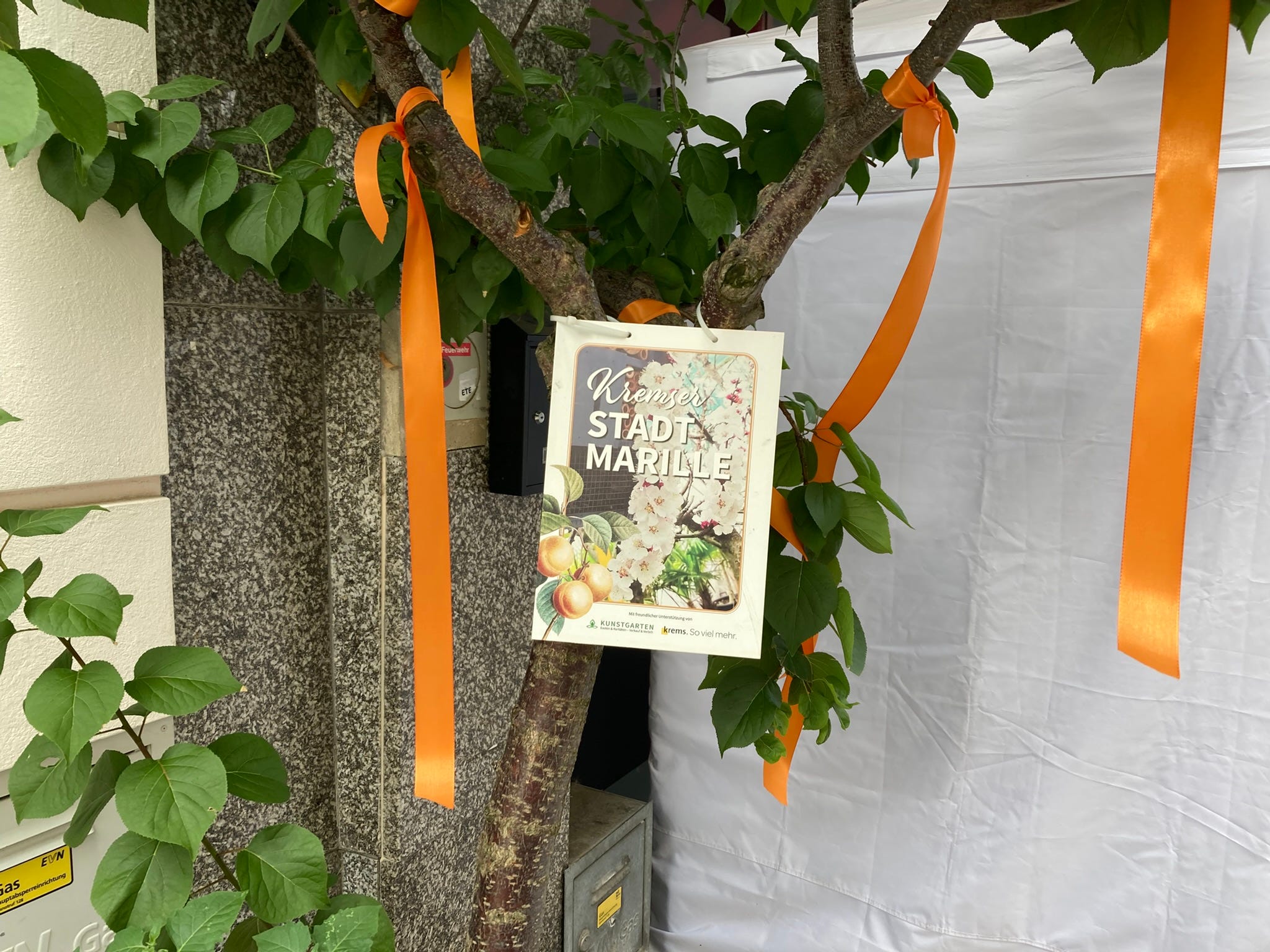
Most Slavic lands use a term similar to Marille or Marunke to name this golden fruit, and older German dialects did too. In Italian, the modern word is albicocca, but the pit is armellina, which still means “apricot” in many northern dialects near Austria. Armellina stems from the same root as Marille, suggesting the word drifted into Austria from the southeast, from what is now Italy or Slovenia.
Botanists speculate that the fruit itself entered Austria the same way, in the time of Alexander the Great.
The scientific name, Prunus armeniaca, means “Armenian plum,” reflecting the belief that apricots sojourned to Europe via Armenia. The plant’s deeper ancestry lies further east, in China, spreading westward along ancient trade routes.
Despite appearances, apricots aren’t a type of peach or nectarine. All three are stone fruits in the rose family, Rosaceae, in the genus Prunus, alongside almonds, cherries, and plums. And Austria has quite the history with this little orange plum-cousin.
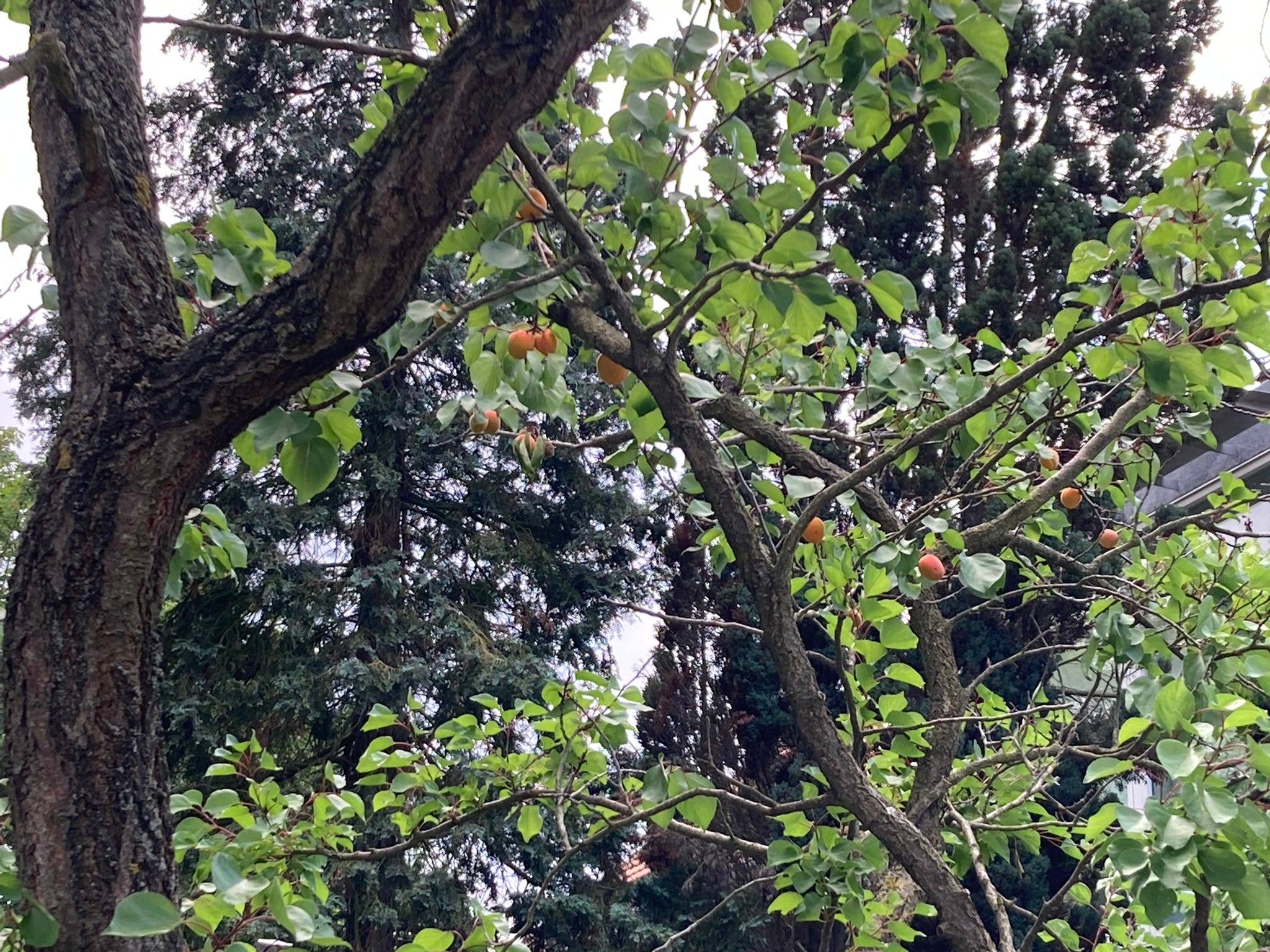
In the late 1800s, growers in the Austro-Hungarian realms seemed to come out with new strains of apricots every season. There weren’t quite a million Marillen, but there were dozens, particularly around the royal estates in Klosterneuburg, near Vienna. Klosterneuburg was in fact part of Vienna on-and-off historically until 1954, and now it’s one of the leading cities of Lower Austria’s Speckgürtel (“Bacon Belt”—the nickname for Vienna’s prosperous, leafy suburbs in the hills). Bacon, apricots, it’s all delicious here. But apricot production has moved out of Klosterneuburg, although vineyards remain.
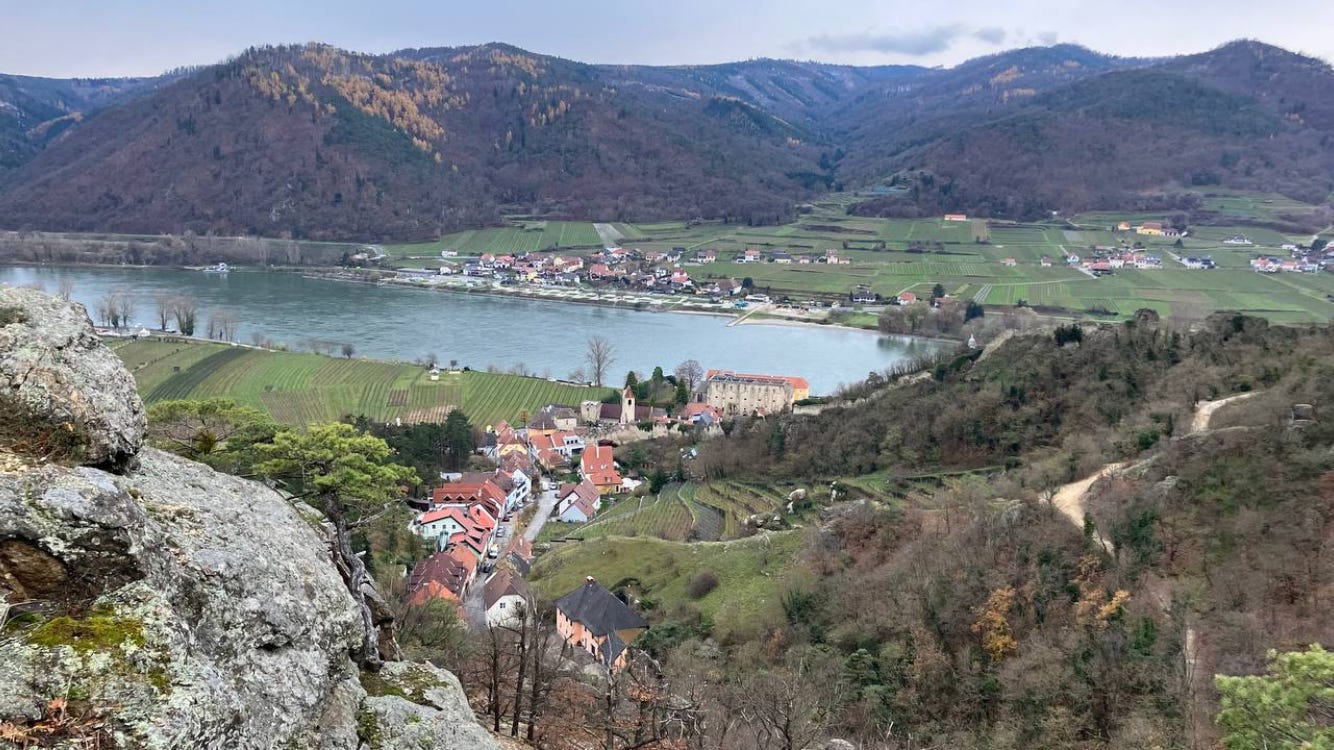
Today, the epicenter of Austrian apricot culture is the Wachau, a mountainous river valley along the Danube about an hour northwest of Vienna. Since 1996, under European food labeling regulations, Austria has protected the apricots grown in this corner of Lower Austria with a designated geographical origin label.
And in 2006, the UN got in on the game: the Wachau valley fruit zone’s 21 orchard villages, comprising over 100,000 commercial Marille trees between Melk and Krems, form a UNESCO-designated protected cultural landscape.
Why here? Because the Wachau provides a Goldilocks environment for the picky apricot.
These little orange sweeties demand:
Warm, but not too hot, Summers
Cold, but not frigid, Winters
Ample sunlight, but without drought
Protection from late freezes, heavy rains, and other extreme weather
A large day-night temperature swing to concentrate sugars in the ripening season
And the Wachau provides:
Average July highs of 26°C / 79°F, with few heat waves
Typical January temperatures around the freezing mark
2000 hours of sunlight per year
450mm or 18” of precipitation per annum, similar to Los Angeles or Sicily
The least snow in all of Austria—a mean of 20cm or 8”
Mountains and hills on all sides to shelter the wide river valley, making a mild climate despite the northern latitude
Relatively cool nights during ripening, as shade comes early on the valley floor, and fresh breezes descend from the mountains
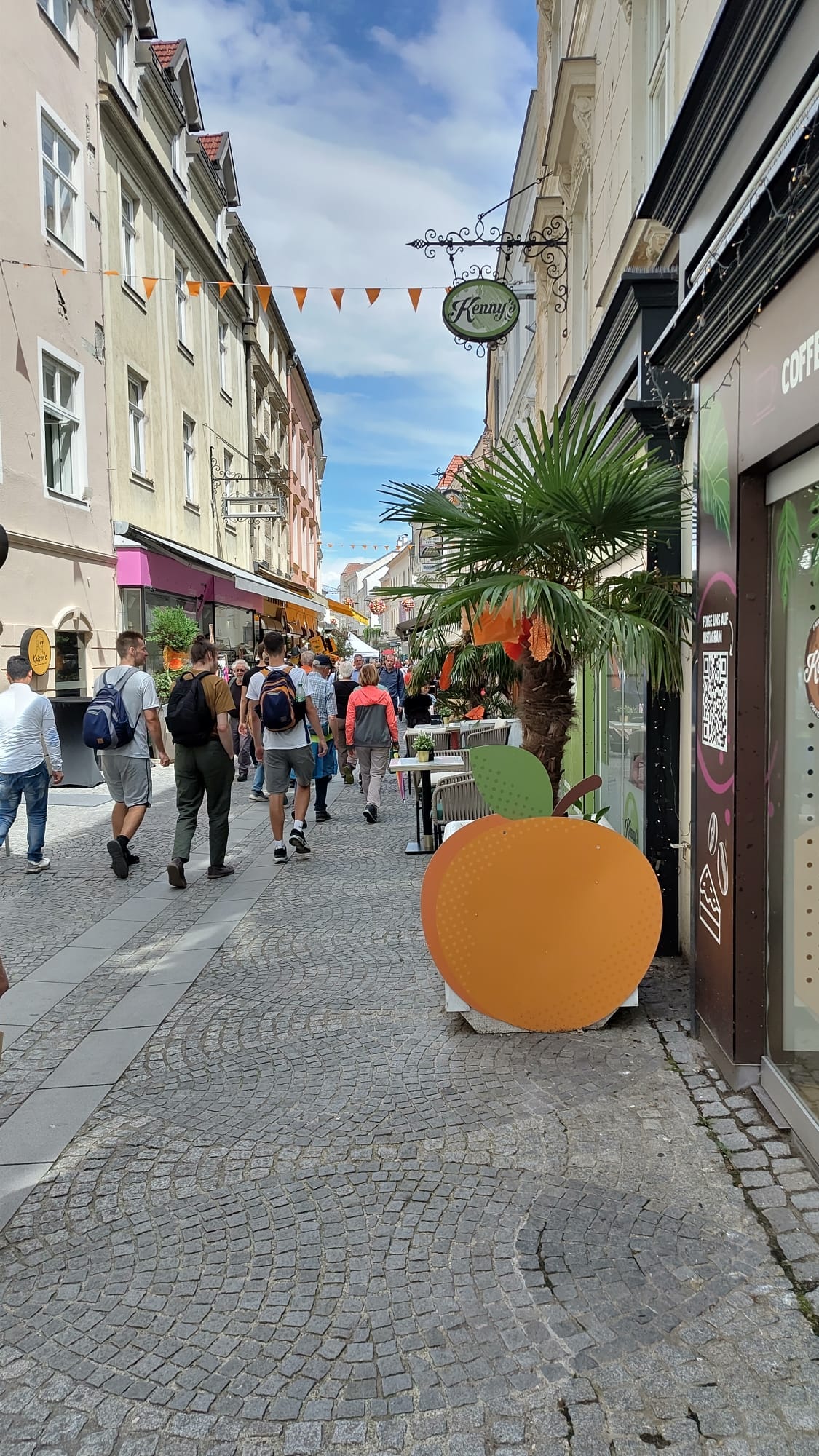
The environment is also perfect for wine grapes, which thrive around the Wachau and most of Lower Austria. Locals even grow palm trees in this region. Small ones. But they exist.
One more picky Marille request: there is a special woven picking basket, the Wachauer Marillenzistel, designed to protect the delicate fruit. Using it is part of maintaining UNESCO heritage status. There are no requirements to wear satin gloves and only harvest under the full moon, but nothing’s stopping you, if so inclined. Plenty of more interesting things happen in harvest season, in June and July, and orchard parties are nonstop.
So why bring up this Summer fruit now?
Because Austria never really stops eating them. Apricots are the fourth-most-grown fruit in Austria, after grapes, apples, and strawberries, but sometimes they seem first place in popularity.
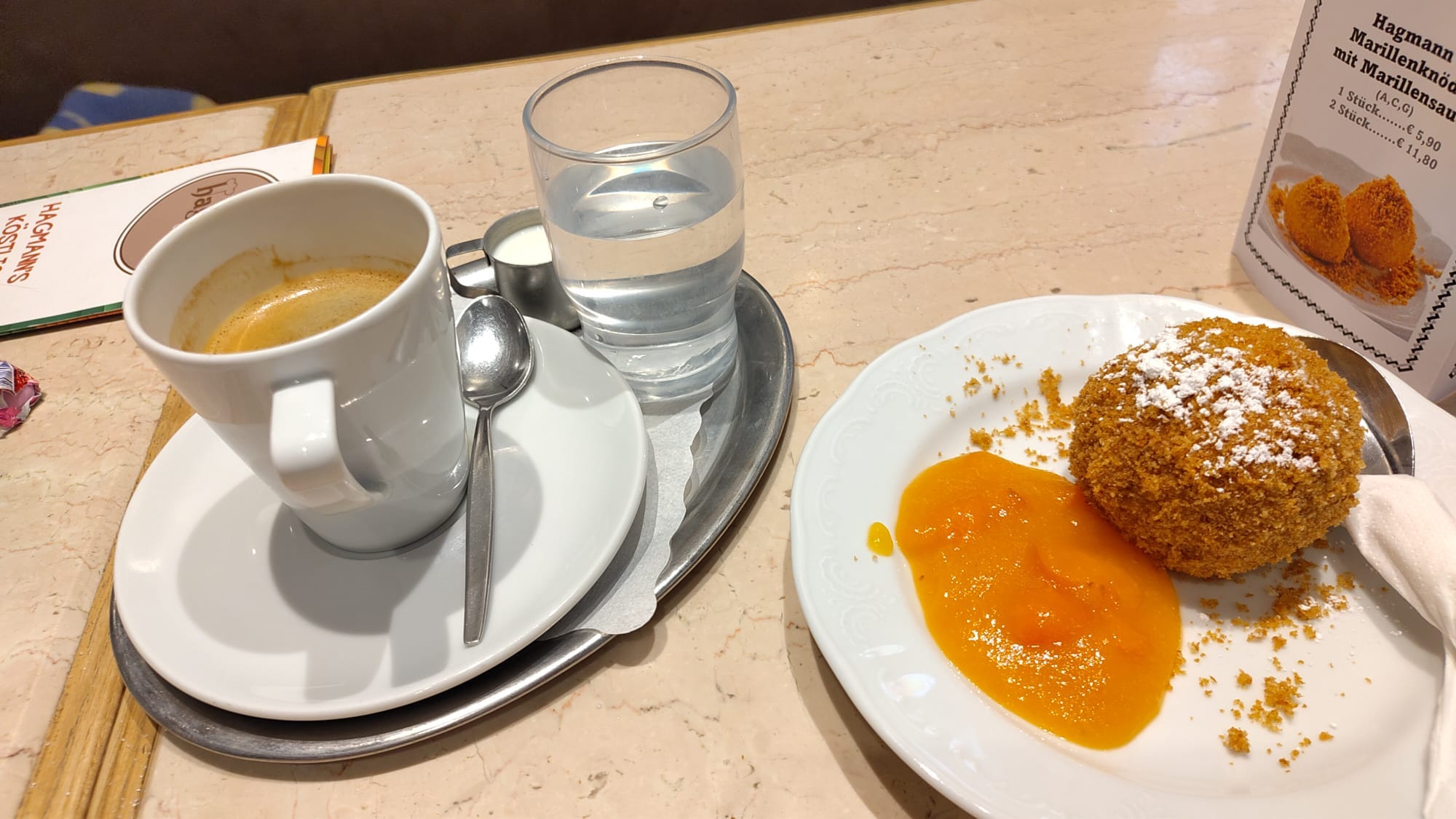
During Advent, Christmas, and Carnival season, Marillenmarmelade is everywhere. Particularly in Krapfen, those globular powdered-sugar jelly donuts stuffed to structural failure with apricot marmelade.
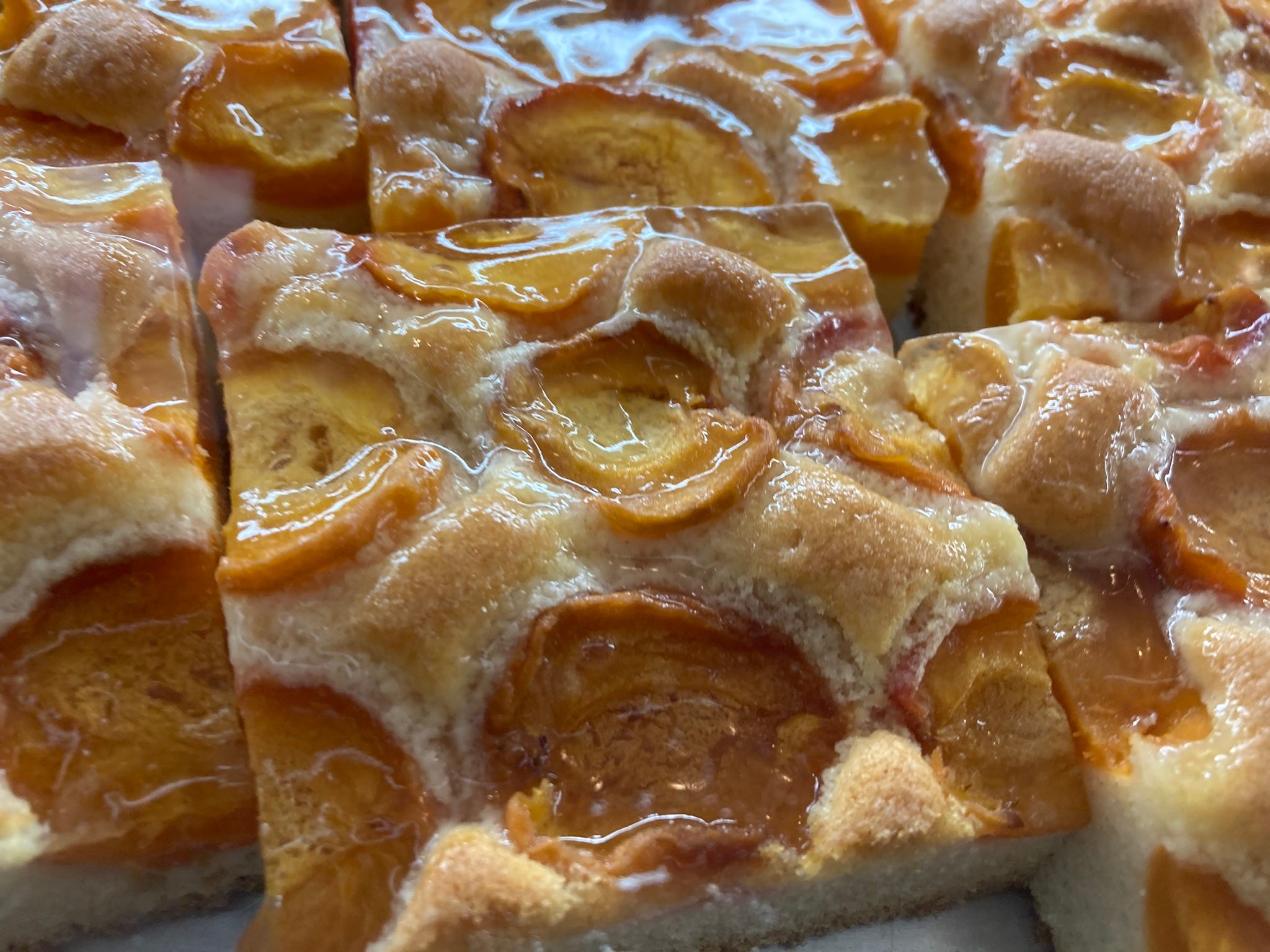
Fruitcakes, dried fruit concoctions, and baked goods rely on apricots as well. Nothing says Merry Christmas in Austria like a Marille-based fruitcake!
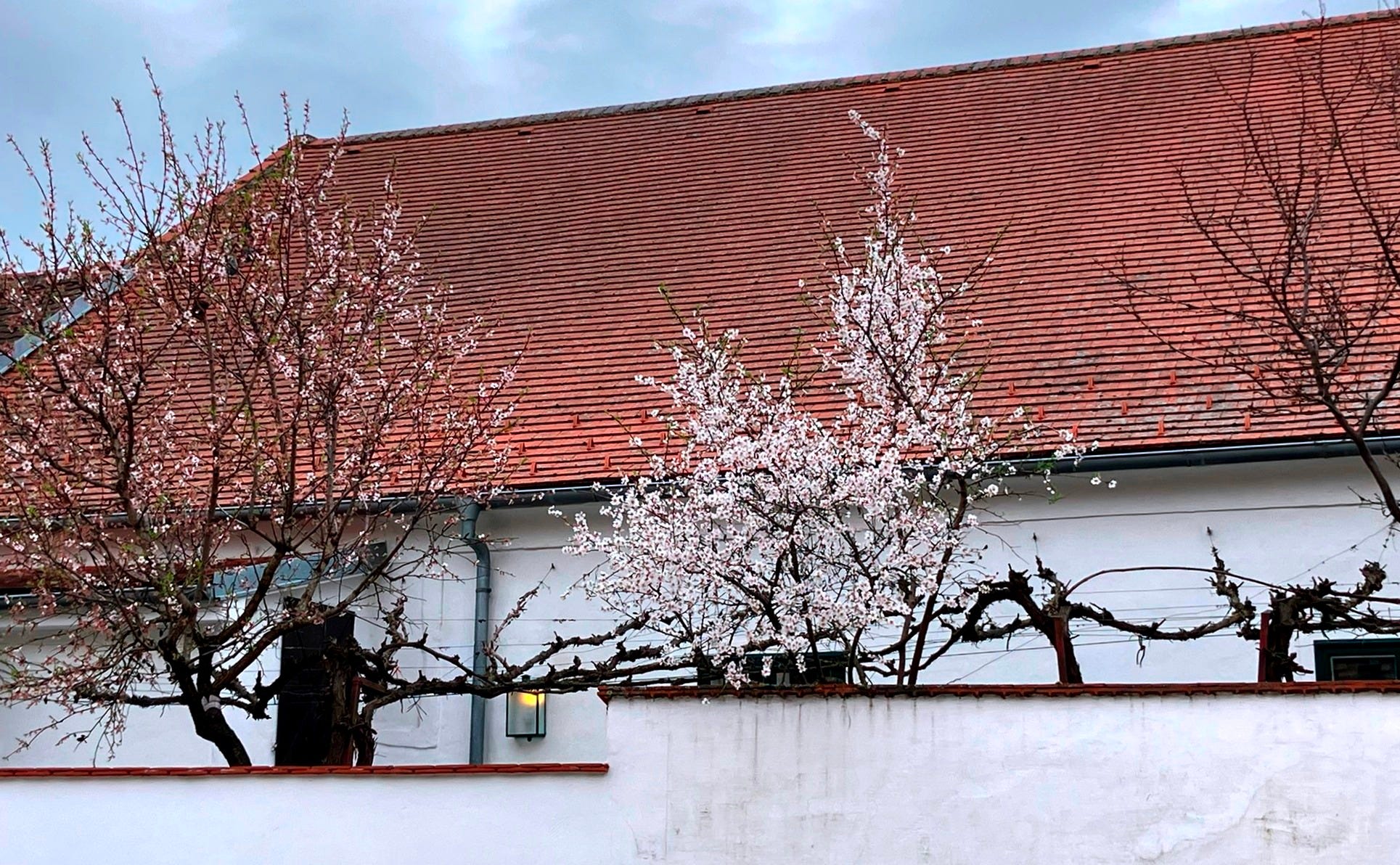
Marillen are a year-round treat. Spring brings pale pink blossoms, Summer the fresh fruit, Autumn dried apricots and new wine from the neighboring vineyards, Winter the jams and pastries. Marille schnapps can be enjoyed ’round the calendar, and ’round the clock as well.
Marille was one of the first words I learned here. Now you know it too, and why it becomes the center of the Austrian universe in June and July. And why it comes roaring back for Christmas, too.
Notes for travelers:
Marillen grow across Austria’s lowlands, but commercial production clusters in the Wachau and the nearby Kamptal (Kamp River Valley), both in Lower Austria 40-50 miles northwest of Vienna. The other principal production area lies in the opposite direction, north of Lake Neusiedl in the state of Burgenland, 30-40 miles southeast of Vienna.
The Wachau, Kamptal, and Neusiedlersee areas also house abundant vineyards, fig trees, and other orchards.
Melk and Spitz are two of Austria’s most popular tourist destinations, both in the Wachau (Melk on the west end, Spitz in the middle). Melk is home to the massive Melk Abbey, featured on The Amazing Race, and Spitz is a particularly historic and scenic orchard town along the Danube.
Krems is also highly popular with visitors, and is a larger town on the east end of the Wachau. It houses a fruit-growing institute, a university, and a medieval stone building district. Nearby is Dürnstein, home to the castle ruins where Richard the Lionheart was held hostage nearly a millennium ago. Because this is Austria, one may hike up into the castle for free, climb the ramparts, and gaze into the valley a thousand feet below, without guardrails.
Langenlois, just outside the Wachau and sitting at the debouchement of the Kamptal (Kamp Valley wine district) near Krems, is the home to dozens of wineries, a wine museum, and a protected historic center.
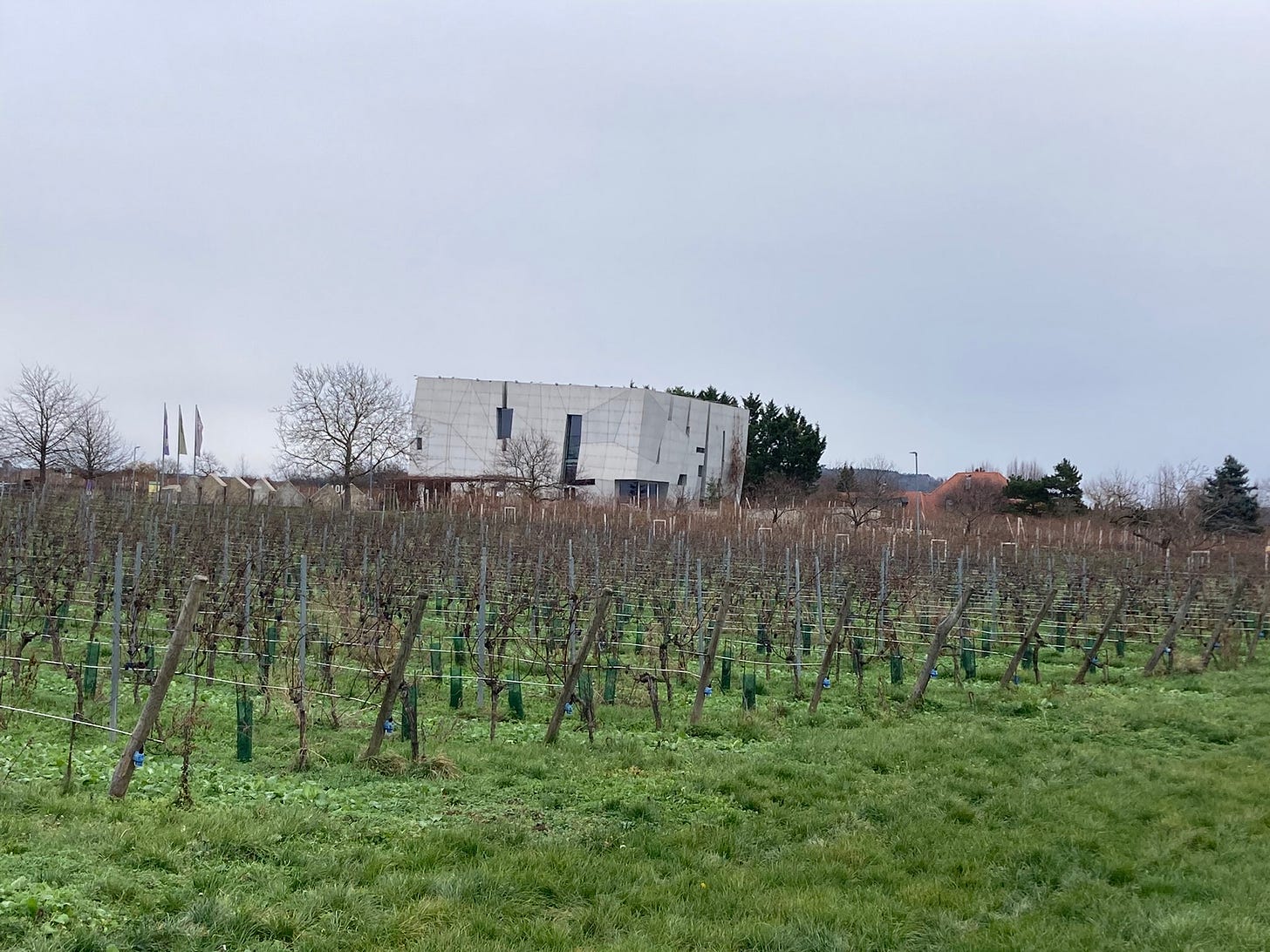
The wine museum in Langenlois, surrounded by vineyards The Neusiedlersee (Lake Neusiedl) is in the opposite direction, to the southeast of Vienna by one hour, and is a major tourism and agriculture zone on the frontier with Hungary. This area has a very different feeling from the Wachau, as it is flat, and was historically more Hungarian than Austrian. It is hotter there, and a different variety of Marille dominates, known as the “Hungarian Best” apricot.
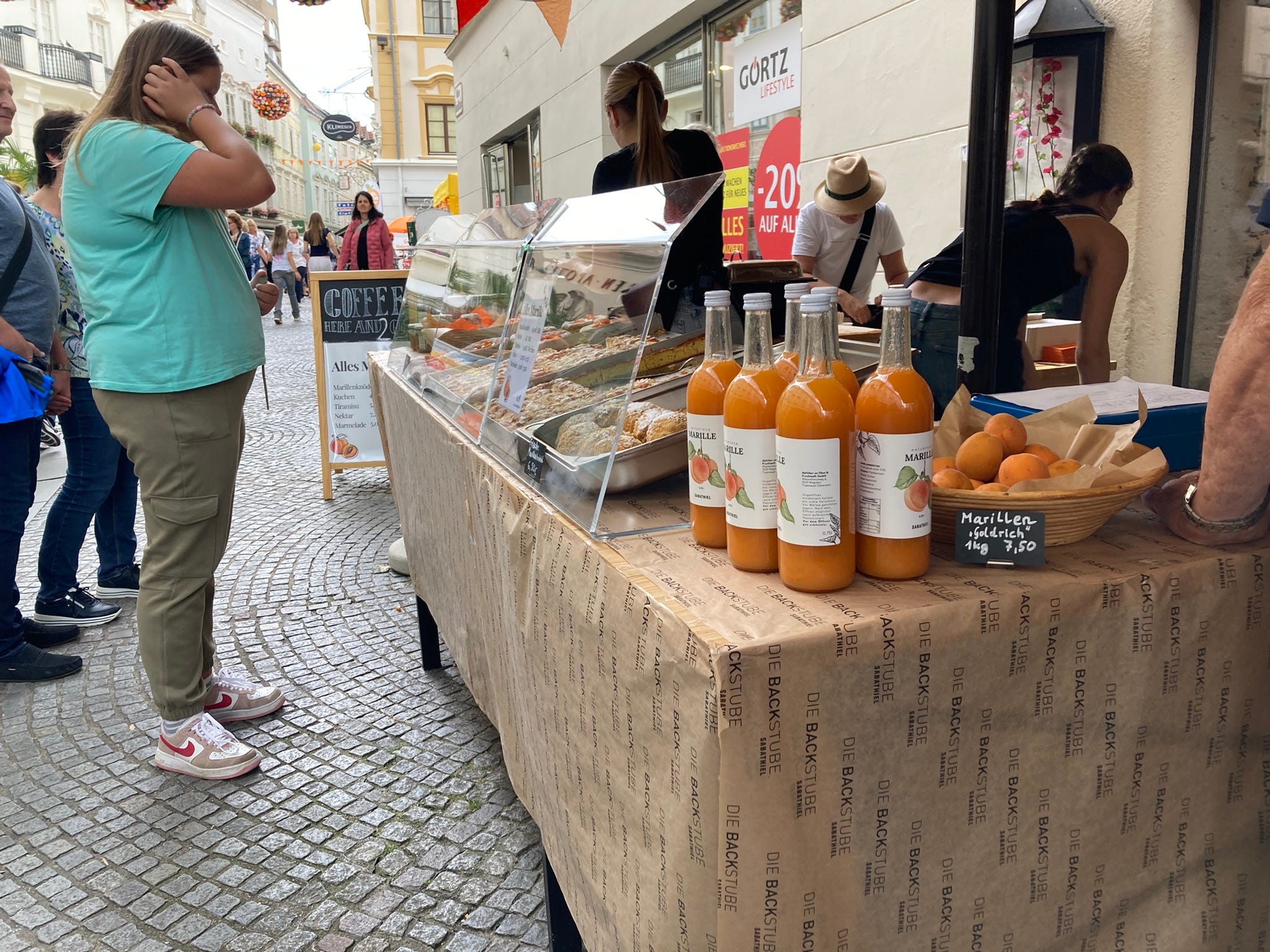
Spitz and Krems both hold apricot festivals for several weekends coinciding with the harvest, from late June to mid-July. Kittsee, to the north of Lake Neusiedl, holds smaller Marille events sporadically.
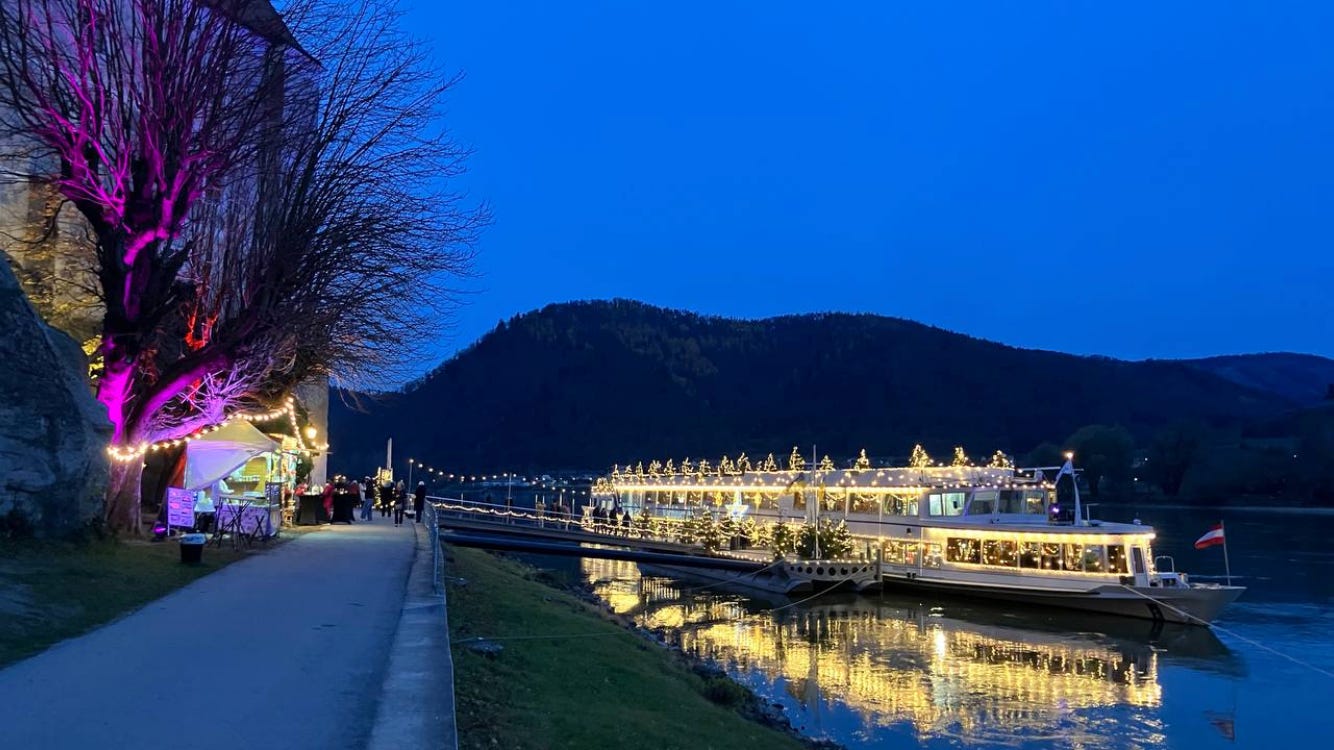
The wider advent and Christmas season (late November to New Year’s) is also a popular, festive time to visit the Wachau, with special Danube River Christmas cruises and seasonal markets in several towns.
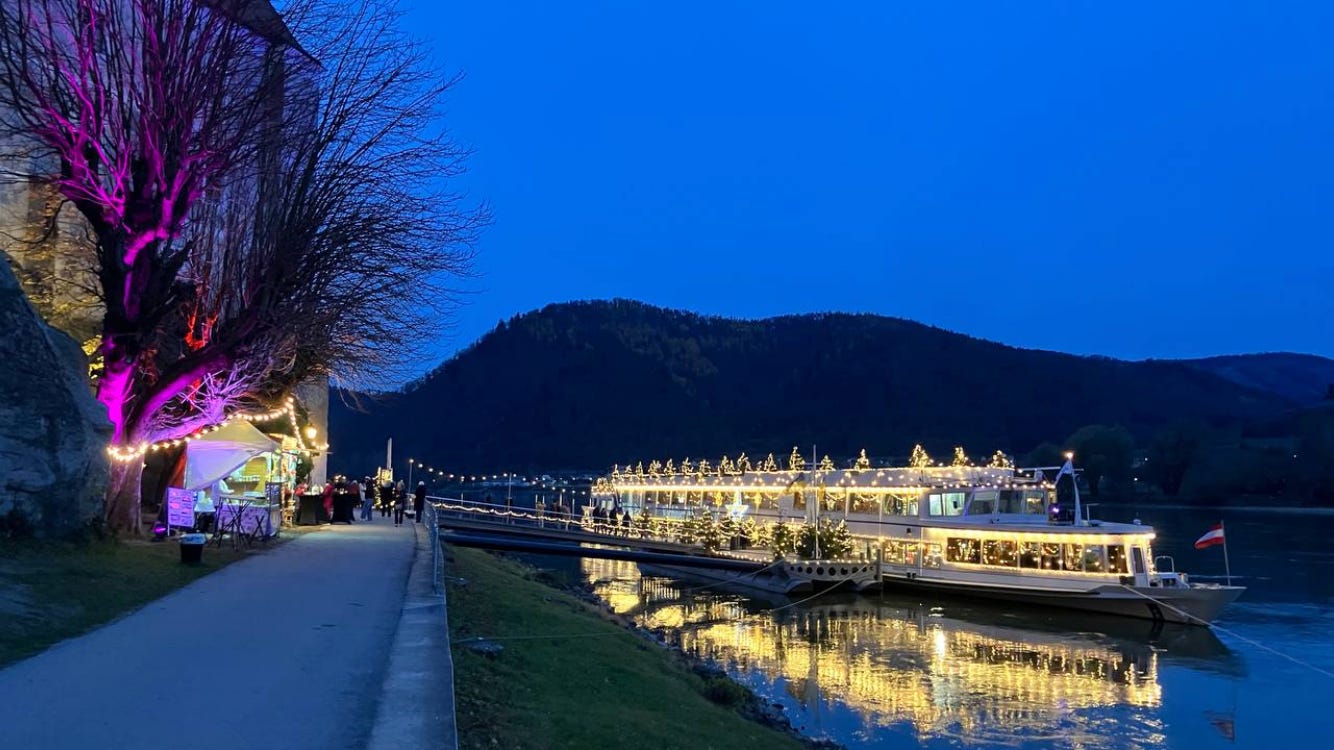
A Danube Christmas river cruise All of these areas are easily reachable in an hour by public transportation, private car, or on organized tours from Vienna. Countless tour buses ply the route from Vienna to the Wachau year-round. The lowland areas are suitable for walking, bicycling, or boat travel over long distances, and local buses scoot hourly between the smaller towns of the regions.
Sankt Pölten, the capital of Lower Austria, is a convenient jumping-off point for the Wachau and Kamptal, if not coming from Vienna.
The Neusiedlersee region is diffuse, and although public transport is generally good, it is slow to move between different sites in the region. It is best explored as separate day trips from Vienna, or staying in the area with a car. The Kittsee apricot zone is to the north of the lake, just over the border from Bratislava, capital of Slovakia. You can easily take a train to Kittsee from Vienna or Bratislava. You can also walk across the border from Bratislava to Kittsee—the apricot fields are only a couple miles from the main part of Bratislava.
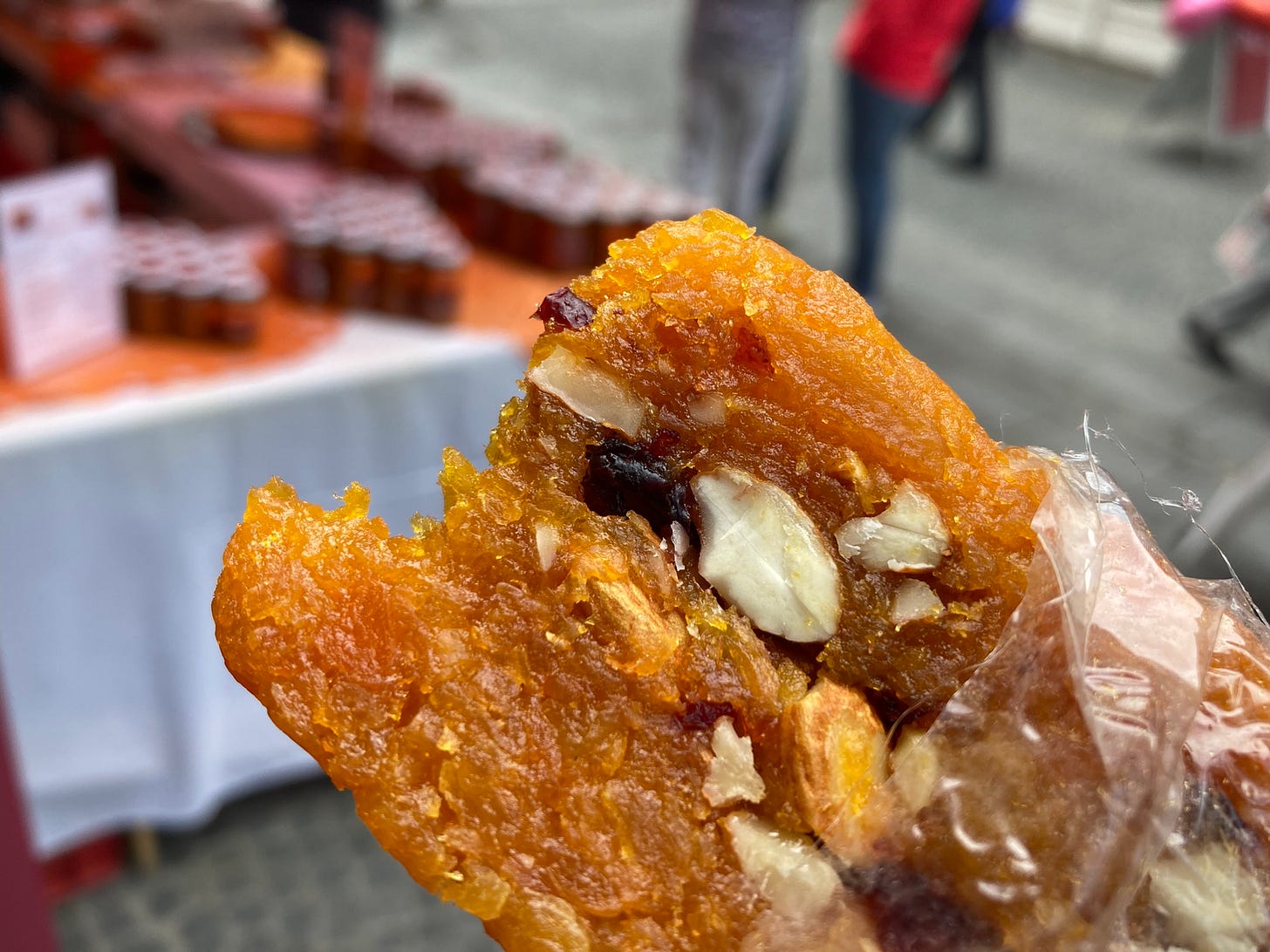
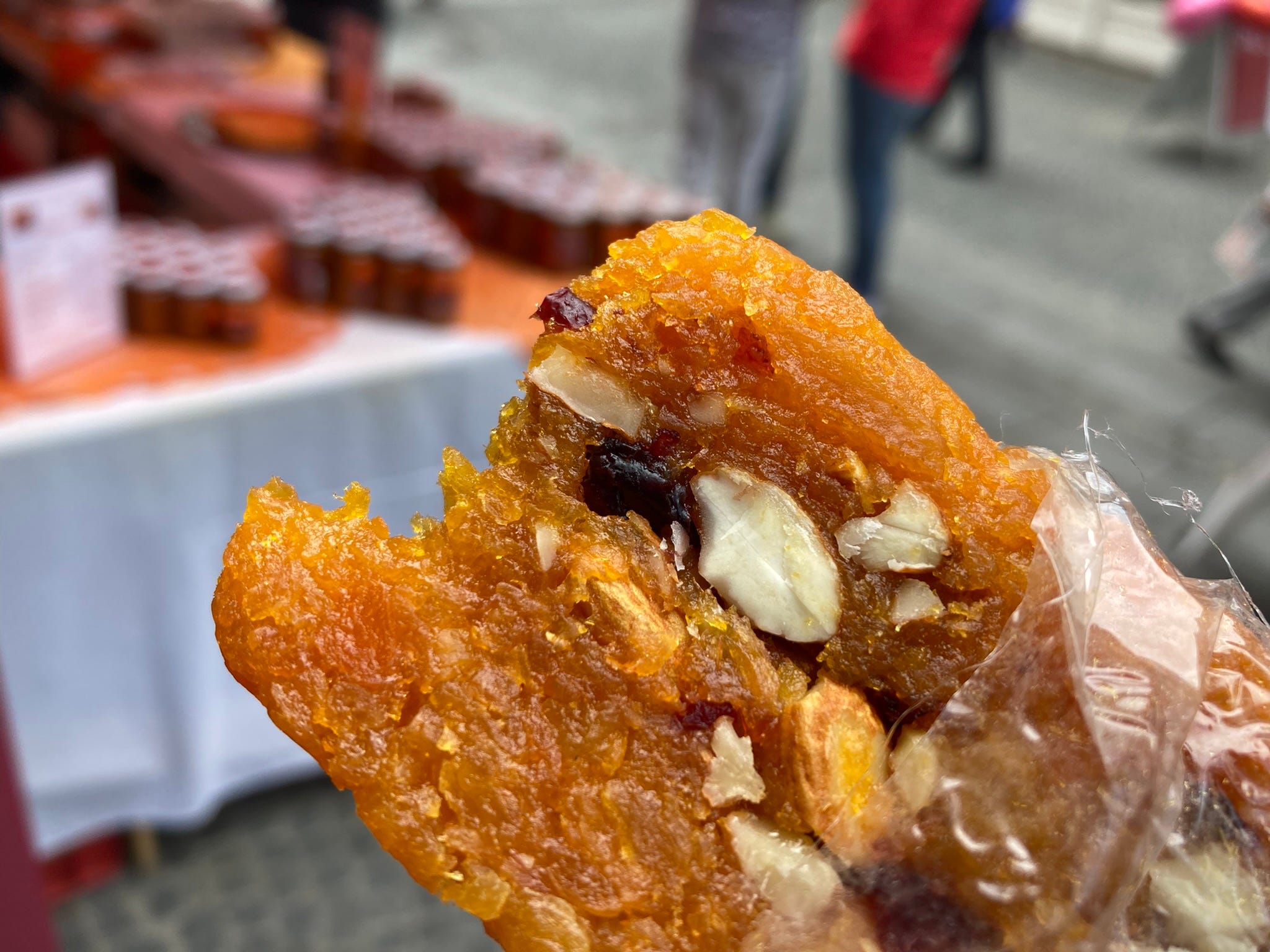
That fruitcake looks like the most delicious fruitcake I’ve ever seen. Not that that’s saying all that much.
Oddly, I usually like anything apricoty…except actually apricots.
Chabacano en México y albaricoque en España. Yum! Too bad I'm keto 😆
Austria looks like such a beautiful country.