
Austrian Dialect: Fasching (Carnival)
Patching together a party with costumes, Krapfen, and chaos

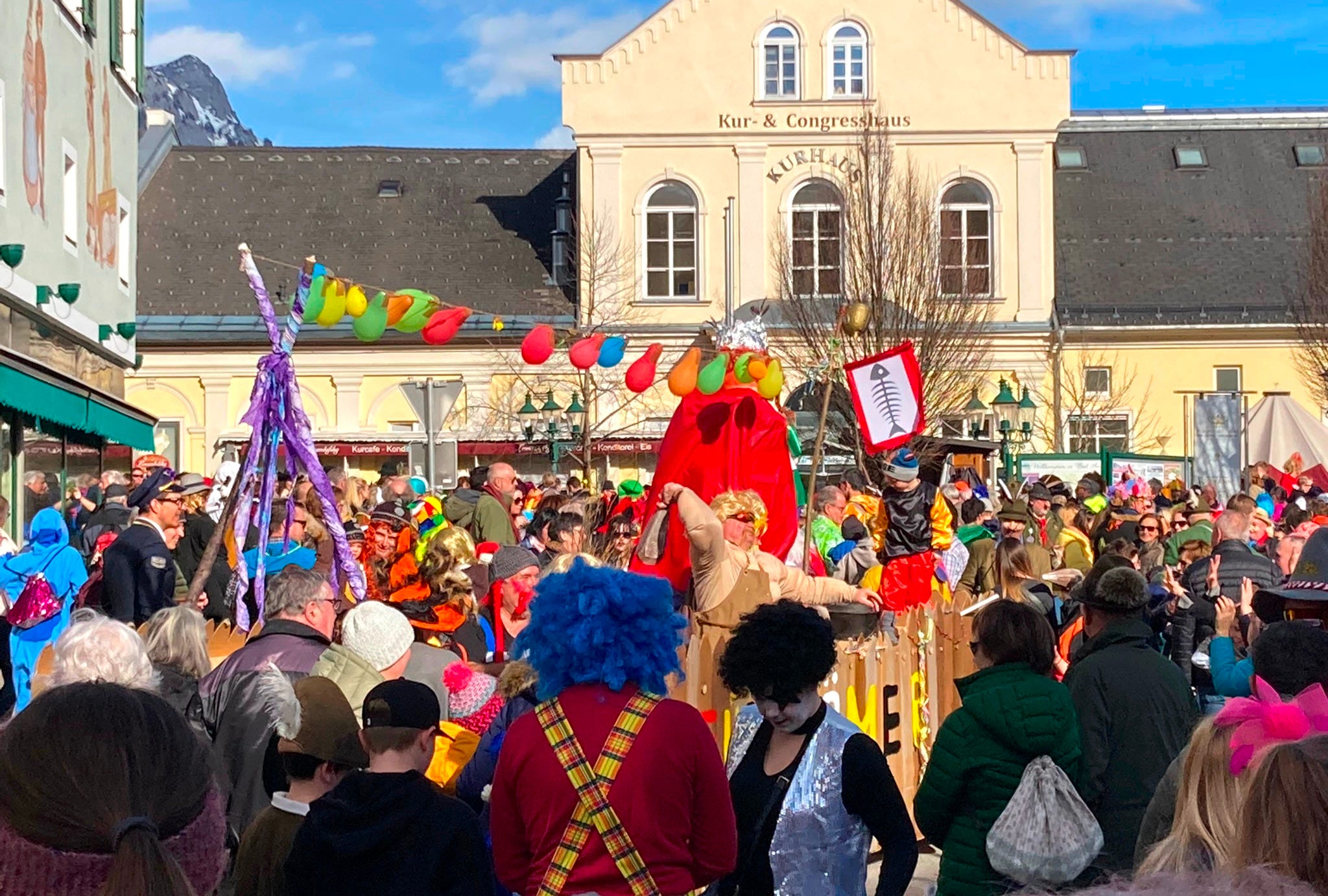
If you’ve ever wanted to see orderly Austrians wearing clown wigs and stuffing their faces with powdered-sugar apricot donuts (Krapfen), now is the time. Fasching is the months-long Carnival season in Austria preceding Lent, but most commonly refers to the week around Faschingsdienstag (Shrove Tuesday). As I somehow inherited little knowledge of Catholicism from my Latino side, these religious-inspired gatherings in deeply Catholic Austria were new to me. So I’ve been diving right in these past few years and have the pictures to prove it! But first the basics (and if you’re looking for a deeper take with cool pictures too, check out Paul Sullivan’s piece on Masopust, a similar Czech festival, with additional commentary on the Pancake Day tradition of Britain).

Fasching is the Austrian version of Carnival. This is the pre-Lenten period of festivity where people let go and act silly before Ash Wednesday arrives to remind everyone of their mortality. It’s an event rooted in Catholicism but embraced by people of all beliefs. Venice’s Carnevale is world-famous, as are Mardi Gras in New Orleans, and Carnaval in Rio. Fasching is part of the same tradition. Whether one will fast for forty days in Lent or ignore the whole season, Fasching is a chance to pig out on Krapfen, beer, and other Alpine delicacies before the party period ends.
The big day is Faschingsdienstag, the last chance to blow off steam before Lent. Austrians don costumes ranging from elaborate historical outfits, to tattered old suits with pink bowties, to colorful children’s creations. But in the Salzkammergut (central Austrian lake district), things take a patchy turn.
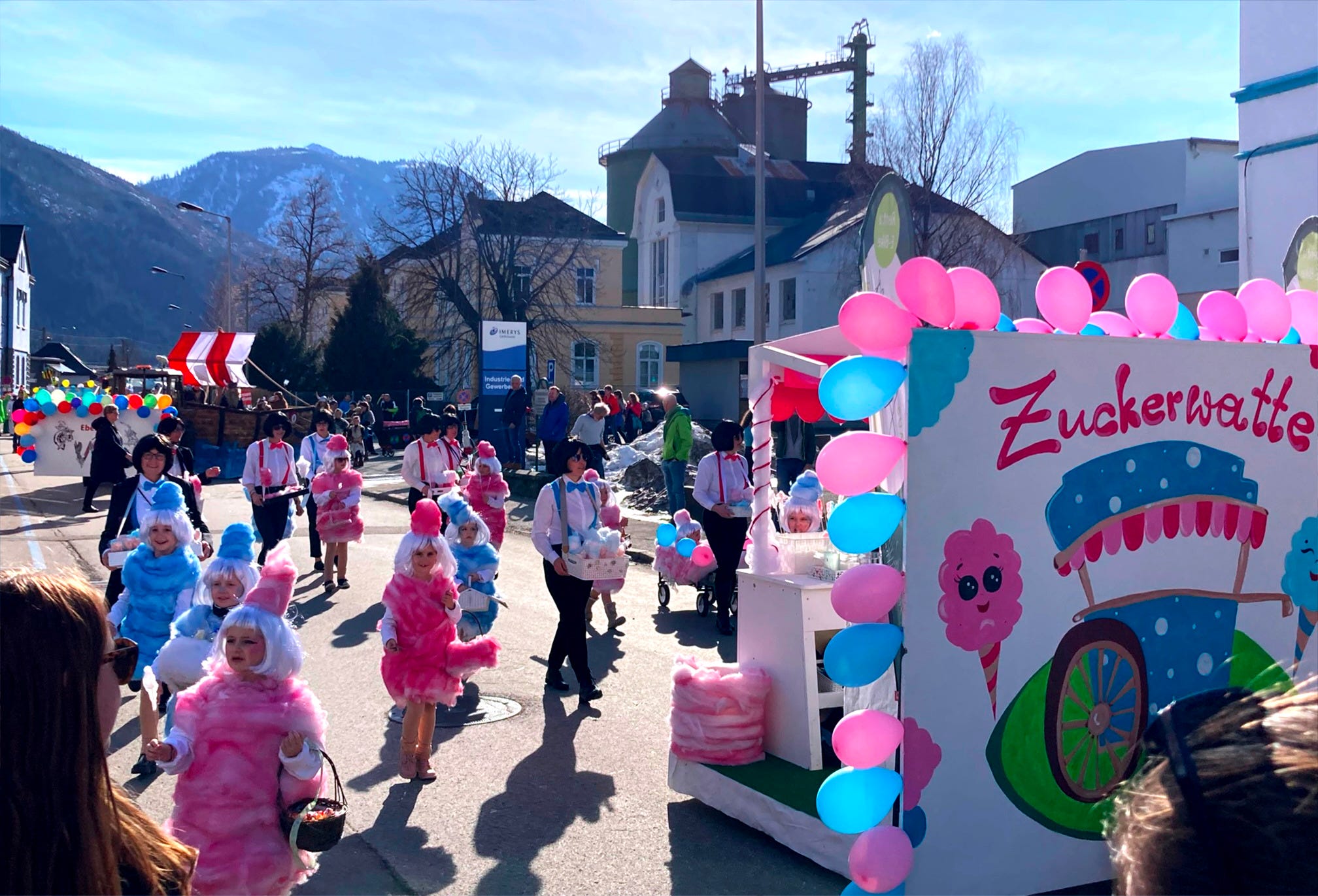
Forget store-bought getups. In the Salzkammergut, it’s strictly homemade: the dress de rigeur is patchwork clothing (Fetzengewand). Locals craft these outfits from leftover scraps of fabric, stitched together with joyful disregard for color coordination. Crowds of partygoers stumble around like a giant drunken quilt. The streets are more colorful than a convention of mariachi bands who happened upon a thousand Austrian-themed piñatas.
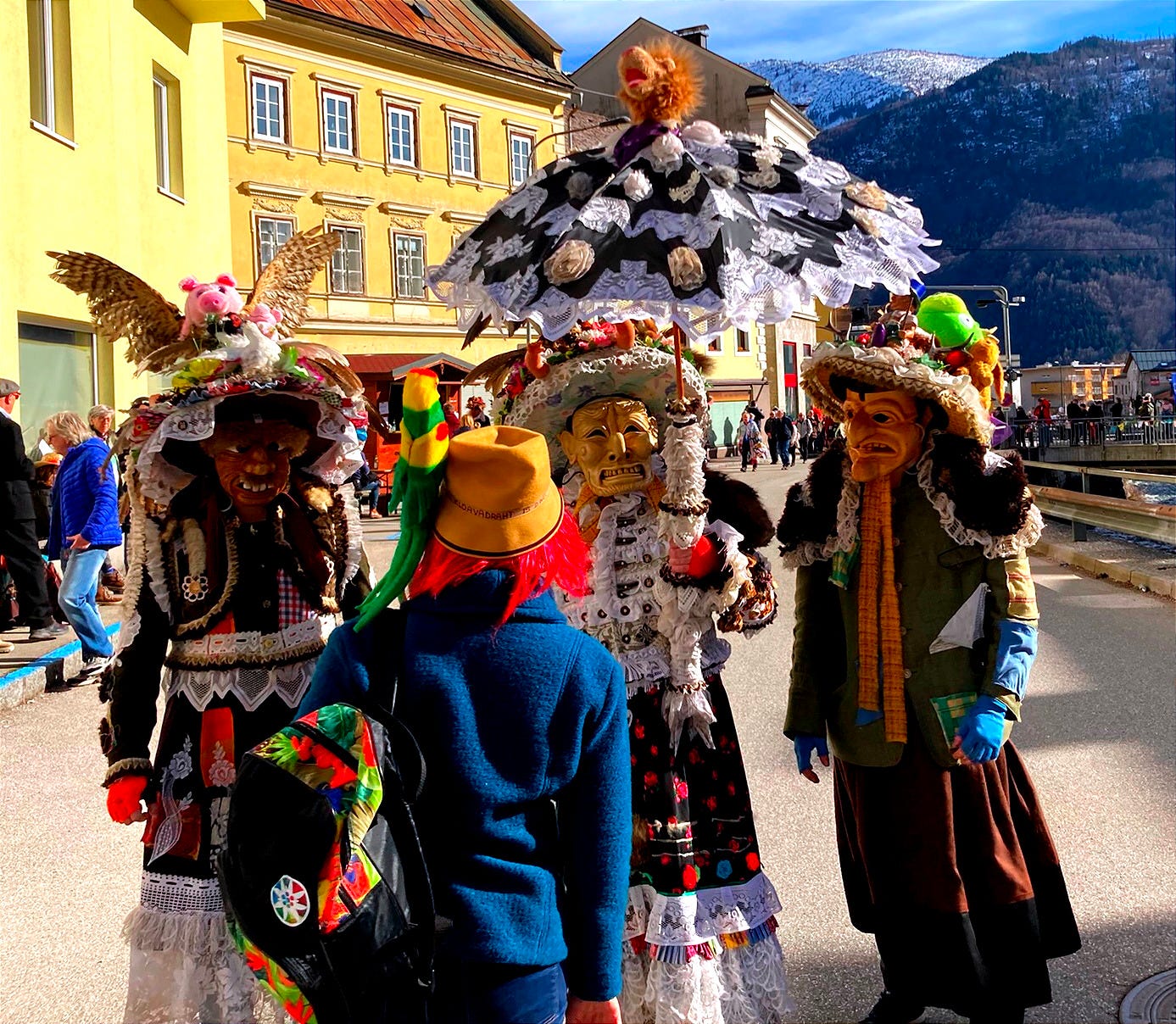
The best-known display of Fetzengewand happens in Ebensee, where the Fetzenumzug (Patchwork Parade) is a highlight of the season. Locals put on their finest scraps and parade through this lakefront town, their faces often obscured by gnarled wooden masks (Fetzenmasken). The origins of these parades are lost to the sands of time, but the ongoing goal is clearly known to all: look as ridiculous as possible.
Another famous parade is in Bad Aussee, where men are supposed to dress in traditional women’s clothing—the more stereotypical, the better, so you will see quite some ridiculous dresses on the local lads. They dance and parade through the streets, and you’re lucky to catch a glimpse. Bad Aussee is a mountain town with tiny roads and thousands of revelers descend upon it every year to witness the spectacle.
A longer-running version of Fasching is in Vienna. The Fasching season technically starts at 11:11am on November 11th, but most everywhere the action doesn’t pick up til February. In Vienna, though, with its Ball Season, festive events run all Winter.
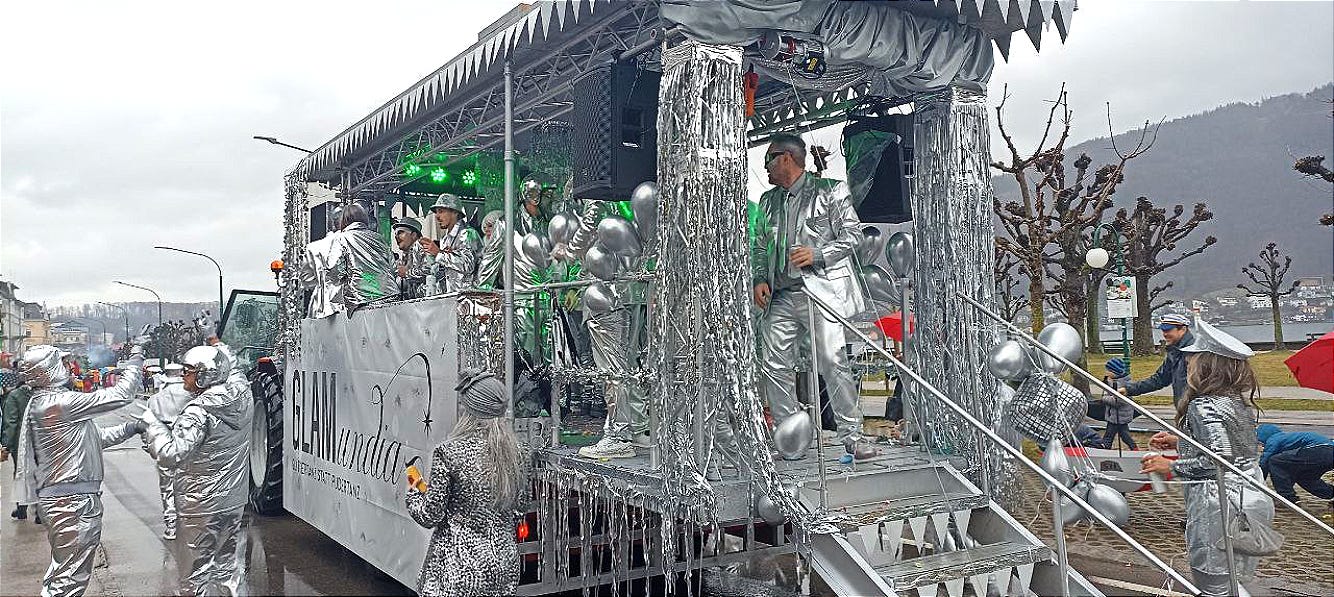
In Switzerland, the season is called Fas(t)nacht. In most of Germany, it’s called Karneval. But in Austria, Bavaria, and parts of Central and Eastern Germany, it’s just plain Fasching. German dialect speakers often use multiple words for the same thing.
But no matter what they call it, people in Central Europe can agree that the most important part of the season is Krapfen. These round donuts are always topped with powdered sugar, and impregnated with sticky apricot jam. I once saw a vendor attempting to sell ones with some kind of purple jam, and nobody was buying them. I’m from the US so I prefer bacon maple donuts, but I’ll allow that Krapfen can pass muster.
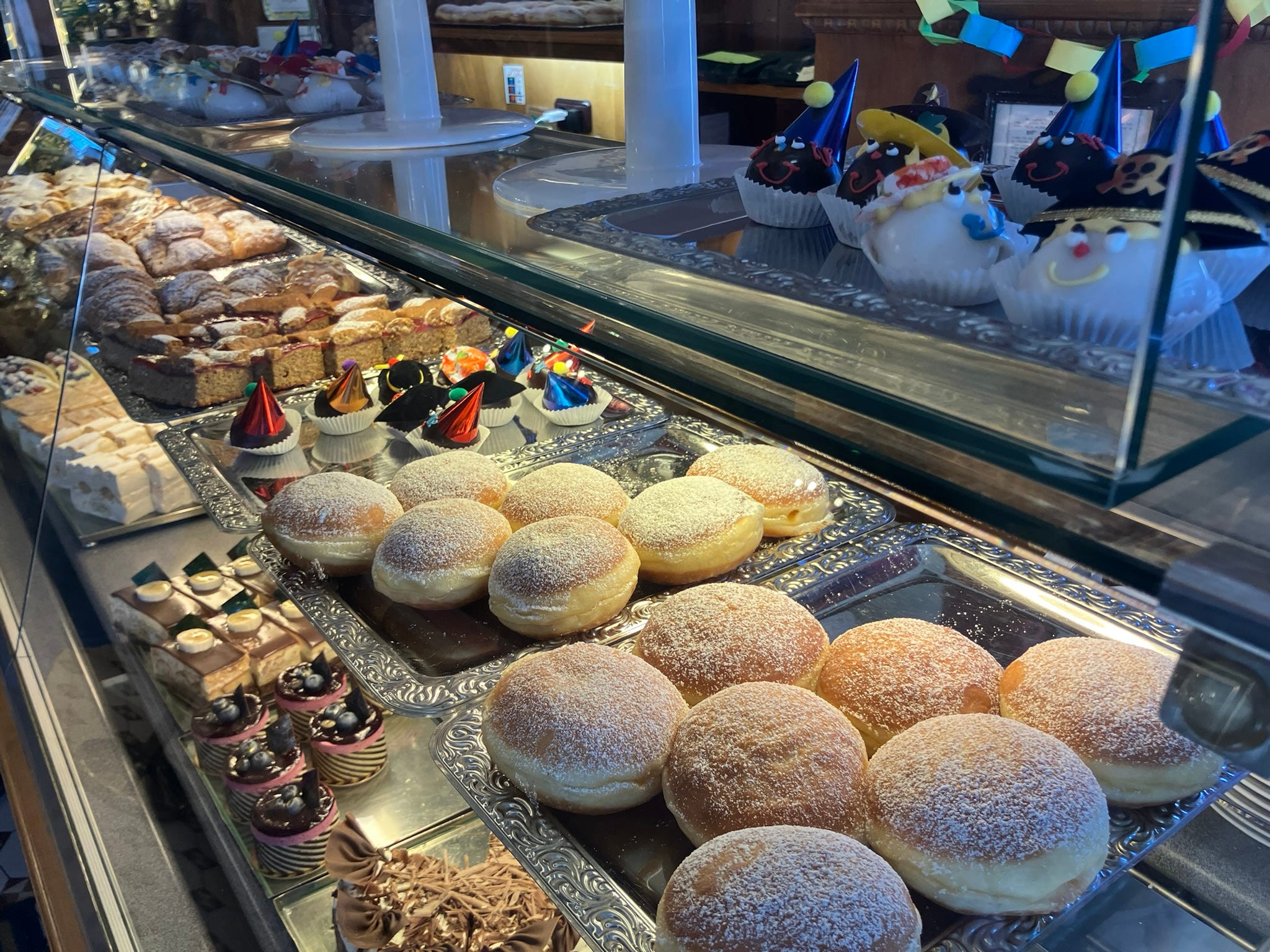
If that isn’t enough gluten and simple carbohydrates, cold beer is always popular during Fasching. In fact cold beer is popular the year round in Austria, and one can drink in public here, but you will especially see everyone drinking all of the time on Faschingsdienstag. Last year some very drunk 70-somethings were on our train heading to Ebensee and they each had their own 6-pack of frosty pint bottles.
So this party for all ages is now over, but please come to Austria on the following Saturdays for four days of Fasching fun: Valentine’s Day, 2026, or February 6th, 2027, or February 26th, 2028…or you can dress up like Raggedy Ann, crack open a Pilsner, pop a few donuts in your mouth, prepare to fast for forty days, and pretend like you’re in the Alps from the comfort of your own couch.
Please enjoy these previous related posts:
I hate to admit this, but I never paid attention to Fasching celebrations during the 5 years I lived in Vienna.
My husband and I are in Vienna now and went out to dinner with friends last night. They showed us pictures of their comical homemade costumes from the night before and talked about how much fun they'd had.
And today I read your article! It all makes me feel guilty--and a bit sad--for having missed out on a fun cultural event.
I will say, however, that my Austrian husband LOVES Krapfen and has already been taking advantage of the season in this regard!
This paints a vivid picture of the celebrations. Great stuff. And thanks for referencing my Masopust article too :) I’ll add a reciprocal link in my article.